

There are thousands of different types of bacteria in the world, all of which are of great importance to both science and humankind. Each type has unique characteristics that make it useful in various fields, from health and industrial processes to environmental quality monitoring.
In this article we will detail all the types of bacteria that exist, their characteristics, forms of classification, importance and how they affect our lives.
Key features

To begin, it's necessary to understand what a bacterium is . Bacteria are a type of microbe found in almost every corner of the world. They take on diverse forms and adaptations that allow them to survive in a multitude of environments, from our intestines to hydrothermal vents or toxic waste. Their adaptability has made them essential to ecosystems and to life in general. For example, the human digestive system depends on the activity of certain bacteria to carry out fundamental processes.
Bacteria are called prokaryotes because they are single-celled organisms that lack internal membrane-bound organelles. Instead of a defined nucleus, their genetic material floats freely in the cytoplasm. This distinguishes them from eukaryotic cells, such as those of animals and plants, which do have a well-defined nucleus and other membrane-bound organelles.
These microorganisms are found everywhere on Earth: from extreme environments like acidic hot springs to soil, water, and even our own bodies. It is estimated that there may be as many as 5 × 10³⁰ bacteria in the world. Many of the species that inhabit this planet have not yet been successfully cultured in the laboratory, which remains a challenge for microbiology.
Bacteria participate in vital processes such as the decomposition of organic matter and the recycling of nutrients, fundamental tasks for maintaining balance in ecosystems. Furthermore, some bacteria are capable of performing the important task of fixing atmospheric nitrogen, a process essential for protein synthesis in many organisms.
Structure of bacteria
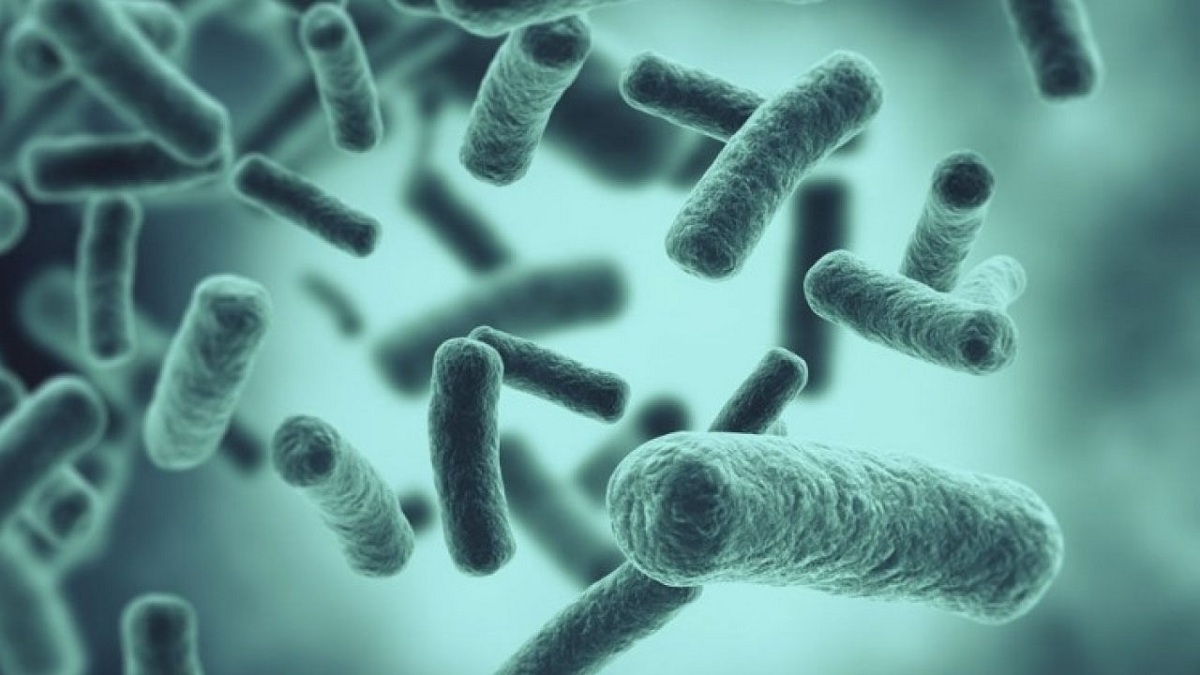
Bacteria have a simple structure compared to other organisms. Their cell envelope consists of a plasma membrane that acts as a barrier between the cell's interior and its environment. This membrane is surrounded by a cell wall , which provides rigidity and structure. In some bacteria, this wall is so resistant that it can protect them from extreme conditions, such as the effects of antibiotics or high temperatures.
The bacterial cell envelope can vary in its chemical composition and shape, which has allowed the classification of many bacteria into two large groups: Gram-positive and Gram-negative bacteria , according to their response to Gram staining.
They also possess one or more specialized structures that allow them to perform different functions. For example, some bacteria have flagella that give them motility. Others develop protective outer layers called capsules, which allow them to hide from the immune system of their hosts.
Classification of bacteria
Since the beginning of microbiology, there have been multiple attempts to classify bacteria based on their morphological characteristics, their food sources, or even their ability to move.

Among the most basic categories for classifying bacteria is their morphological shape . Throughout history, this shape has been key in the identification and classification of many bacterial species. Below, we detail the main morphological types of bacteria:
Cocos
Cocci are bacteria with a spherical structure, whose name derives precisely from their circular appearance under a microscope. These bacteria are easily identifiable individually, and different groupings are often observed depending on their arrangement. These are some types and groupings of cocci:
- Coco: Solitary spherical bacteria.
- Diplococcus: Two coconuts that stay together.
- Streptococcus: Chain-shaped groupings.
- Staphylococcus: Clusters of grapes in the shape of a bunch.
Bacilli
Bacilli are elongated bacteria shaped like a rod or cylinder. Like cocci, they can appear singly or in different configurations:
- Bacillus: Elongated basic shape.
- Diplobacillus: Two bacilli united.
- Streptobacillus: Chains of bacilli.
- Palisade: Bacilli forming a lateral wall.
There is also an intermediate form known as a coccobacillus , a kind of mixture between the rounded shapes of cocci and the elongated shapes of bacilli.
Helical bacteria
Helical bacteria have a curved or helical structure. This group includes spirochetes and spirilla.
- spirochetes: Bacteria with a flexible helical structure.
- Spirils: Rigid helical structure.
- Vibrio: Comma-shaped curvature, characteristic of the genus Vibrio.
Ecological, industrial and medical role of bacteria

Bacteria are essential in many aspects of everyday life, especially in industrial processes, nutrient recycling and health.
Ecological role: Bacteria contribute to the decomposition of organic matter, help recycle nutrients in ecosystems, and play an important role in the nitrogen cycle. In extreme environments, some bacteria are able to survive and live in symbiosis with other life forms, even in the most inhospitable conditions.
Role in industry: In the food industry, bacteria are used to ferment products such as cheese, yogurt, and vinegar. Additionally, some bacteria play a significant role in biotechnology, as they are used in the production of medicines, antibiotics, and chemicals.
Medical role: Not all bacteria are harmful. In fact, the human body harbors a large number of beneficial bacteria that help maintain the health of the digestive system. However, some are pathogenic and are responsible for diseases such as cholera, tuberculosis, and syphilis. Antibiotic resistance is another global problem related to pathogenic bacteria.
Over the centuries, science has delved deeper into the study of these microorganisms, learning about both the benefits and the harm they can cause. Today, understanding bacteria is essential for fields such as medicine, biotechnology, and ecology.