

If politicians in Chile can maintain their commitment, the country is taking a giant leap forward in its renewable energy policy . Chile has set the ambitious goal of decarbonizing its economy by 2050. This plan not only implies a shift towards clean energy , but also a structural transformation involving several technical, social, and economic challenges.
One of the main objectives is to limit the development of new coal-fired power plants, stipulating that any such project must include carbon capture and storage (CCS) systems or equivalent technologies to mitigate emissions. Furthermore, the plan includes the gradual closure of existing thermoelectric plants. According to projections from the Chilean Ministry of Energy , the country expects more than 70% of its energy mix to be based on renewable energy sources by 2050.
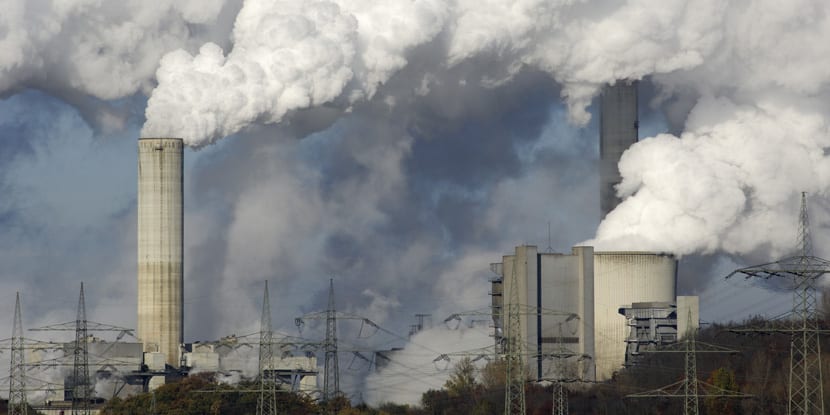
The decision to begin this process was taken jointly by the country's main electricity companies, such as AES Andes, Colbún, Enel and Engie, and was supported by the government. In fact, during President Michelle Bachelet's term, an agreement was signed not to build more coal plants without emissions capture technologies and to accelerate the closure of existing ones.
Initiatives in line with the Paris Agreement
Chile's decarbonization plan is aligned with the commitments made in the Paris Agreement . According to former Energy Minister Andrés Rebolledo, Chile has exceptional conditions for the development of renewable energy, mainly due to the country's abundant solar and wind resources. "We have set ourselves the goal that by 2050, between 70 and 90% of our energy mix will be composed of renewable energy," he stated.
This optimistic outlook is also reflected in recent data: By 2022, renewable energy already accounted for more than 40% of electricity generation in Chile, surpassing coal. This is a dramatic change compared to 2014, when this figure barely reached 7%.

Advances and challenges of renewable energy
Currently, solar energy is the most developed in the country, with large-scale projects such as the El Romero Solar plant, which was the largest in Latin America at the time of its inauguration in 2016. This 246 MWp plant has been key in improving the competitiveness of clean energies.
The increase in electricity generation from renewable sources has not only been beneficial for the environment, but has also proven to be more cost-effective. According to an economic impact report, the El Romero plant will contribute more than $300 million to the Gross Domestic Product (GDP) over its lifetime, doubling the benefits of an equivalent coal-fired plant.
Progressive elimination of coal
With eight coal plants closing between 2019 and 2023 and another twelve planned for 2025, Chile is accelerating its pace towards full decarbonisation. However, there are at least eight plants that still do not have an agreed closure date, representing one of the biggest challenges for Chile in the immediate future.
One of the most complex cases is that of the Guacolda power plant , the largest coal-fired power complex in the country, which still does not have a fixed closure date. Located in Huasco, a designated "sacrifice zone," this plant has generated concerns due to its environmental impact and its role in local pollution. Communities near these power plants face not only health problems stemming from pollution, such as respiratory illnesses, but also economic dependence on these industries.

Plant closures and conversion opportunities
One of the major questions is what will be done with the infrastructure of the plants that are closing. In this respect, Chile could draw inspiration from international projects. In Germany, for example, coal-fired power plants have been converted into thermal energy storage facilities . One possibility being studied is using these plants to store solar energy through molten salts. This technology would allow Chile to make the most of its renewable resources while maintaining some of the existing infrastructure.
Another option under consideration is the conversion of existing plants to produce green hydrogen . While this approach presents challenges, it also offers significant opportunities to decarbonize sectors such as transportation and heavy industry.
Social and economic challenges
The closure of coal-fired power plants, while positive from an environmental perspective, also presents social and economic challenges . Many of the areas where these plants are located depend on them economically for their livelihoods. For example, in the Huasco region, local fishermen and farmers have expressed concern about how the energy transition will affect their livelihoods. It is essential that the government address these issues through inclusive policies that offer employment opportunities in sectors such as renewable energy.
To minimize the social impact, the government has established an “ Interministerial Committee for a Just Socio-Ecological Transition ,” which includes the Ministries of Environment, Energy, Social Development, Labor, Economy, Mining, and Health. This committee aims to ensure that the closure of coal-fired power plants and the transition to clean energy are carried out equitably and fairly for all affected communities.

Some communities, such as those in Huasco, are seeing the expansion of solar energy as a ray of hope. However, concerns have been raised about the location of large solar installations near agricultural and residential areas, which requires careful planning to ensure that new social conflicts are not generated.
The transition to renewable energy represents not only an environmental responsibility but also an economic opportunity for Chile. As the country advances in its decarbonization plan, it will face challenges, but it will also open new opportunities for the development of a more competitive, sustainable, and equitable economy.